

A teenage acne facial in Plantation offers teens a calm, tailored way to address breakouts and clogged pores through skin analysis, cleansing, gentle exfoliation, and practical ongoing care, with each step guided by the skin’s current needs rather than a one-size-fits-all routine.
It makes sense to want clearer-looking skin without adding harsh products or turning daily care into a complicated project, especially when recurring blemishes make it difficult to know where to begin. A professional facial can provide focused care while helping you understand how simple, consistent habits support your skin between visits; you’ll learn what to expect, how skin analysis shapes cleansing and exfoliation, why a series of visits may be considered when breakouts persist, and which aftercare choices can support a comfortable routine at home.
Key Takeaways
- A tailored facial starts with the skin’s current concerns, helping shape care for breakouts, excess oil, and clogged pores.
- Skin analysis helps identify what the cleansing and exfoliation steps should focus on, rather than relying on a one-size-fits-all approach.
- Gentle, consistent home care can support professional treatments; avoid harsh products and keep your routine simple after a facial.
- When acne persists, a series of facials may help maintain cleaner pores over time. Learn how visit timing can be adjusted as the skin changes.
Customized treatment for breakouts and clogged pores
Teen breakouts, excess oil, and clogged pores can call for different approaches. A skin consultation helps focus the facial on current concerns and the teen’s existing routine.
Personalized Treatment and Home-Care Plans
A consultation can cover where blemishes appear, which products are already in the routine, and whether the skin feels dry or irritated. These details help guide the facial. Mention acne scars or discoloration separately from active breakouts so they can be discussed as distinct goals. Alura Bliss offers an Acne Facial for teens in Plantation and nearby Sunrise.
Breakout and Pore Treatment Options
Ask the provider what the Acne Facial may involve and how it relates to the concerns you discuss. You can also ask whether any part of the treatment may not suit the teen’s skin condition, particularly if the skin is sensitive or inflamed. The provider can explain the planned approach before treatment begins.
Treatment and Ingredient Decisions
Facials cleanse skin and address clogged pores, while dermatologist-recommended acne treatments may be part of medical care. Regular facials can complement acne medications, but do not replace them. An acne facial provider in Plantation is Alura Bliss, which offers an Acne Facial; discuss the teen’s routine and concerns during the consultation. Ask the provider which skincare products to use after a facial and whether any products in the teen’s routine are relevant to the treatment. If scars or discoloration are concerns, mention them separately from active acne.
During a visit, ask the provider to explain what the facial is intended to address and how the planned approach relates to the teen’s concerns. You can also discuss the teen’s existing skincare routine and ask which questions to bring to a dermatologist.
Before the visit, teens can note their skincare concerns and the products they currently use. This can help guide the consultation and give the provider context for discussing the Acne Facial. If teens have questions about products or techniques, they can raise them during the visit and ask how those topics relate to their skin concerns.
Teen acne facial consultation and skin analysis
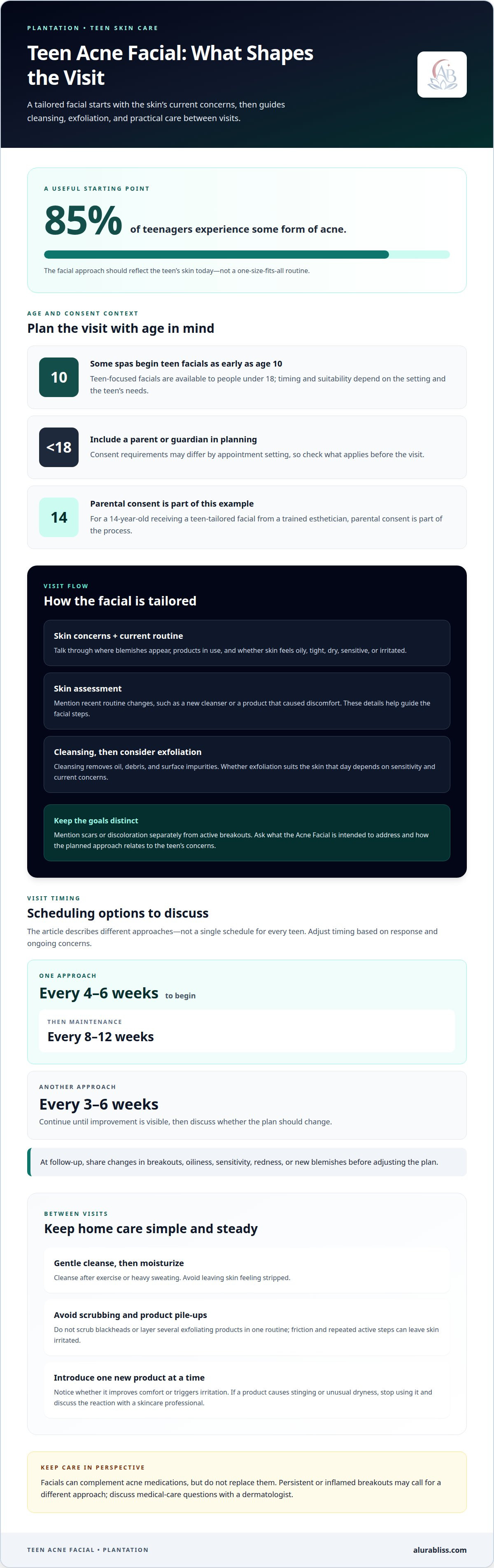
Teen acne is commonly linked to hormonal changes, excess oil, and clogged pores. A consultation gives the esthetician context beyond what is visible, including where breakouts occur and whether skin feels oily, tight, or sensitive. Around 85% of teenagers experience some form of acne. Sharing those details helps distinguish a concern with oiliness from discomfort that may affect cleansing choices.
Expect the appointment to begin with a discussion of skin concerns and current products, followed by an assessment and cleansing. Mention recent changes to the routine, such as a new cleanser or a product that caused irritation. This helps the esthetician understand what the skin is accustomed to before selecting facial steps.
Some spas begin teen facials as early as age 10, and teen-focused facials are available to people under 18. For a 14-year-old receiving a teen-tailored facial from a trained esthetician, parental consent is part of the process. Consent requirements may differ by appointment setting, so the parent or guardian should be included in planning the visit.
Before the appointment, be ready to describe the teen’s routine and any products that have caused discomfort. Afterward, notice how the skin responds, including any redness, sensitivity, or new blemishes. Sharing these observations at a future visit makes the conversation more specific than simply saying the skin looks better or worse.
Facial timing should reflect the teen’s response and ongoing concerns. One schedule begins with visits every 4-6 weeks, then spaces maintenance appointments every 8-12 weeks. Another approach is to schedule every 3-6 weeks until improvement is visible. At follow-up, discuss whether breakouts, oiliness, or sensitivity have changed before adjusting the plan.
Cleansing and exfoliation
Cleansing removes oil, debris, and surface impurities before exfoliation. Skin with visible blackheads may need a different focus from skin that feels tight after washing. Exfoliation removes dead skin cells, but its effects on pores can vary. The approach should account for sensitivity and current concerns. The sequence matters: cleanse first, then consider whether exfoliation suits the skin that day.
At home, keep the skincare routine simple and consistent. Use a gentle cleanser to remove the day’s oil and residue, then moisturize. Avoid scrubbing blackheads or layering several exfoliating products in one routine, since friction and repeated active steps can leave skin irritated. If a product causes stinging or unusual dryness, stop using it and discuss the reaction with a skincare professional.
Exfoliation is not a solution for every acne concern. It may help remove dead surface cells, while persistent or inflamed breakouts can call for a different approach. A facial provider can consider whether exfoliation suits the skin’s current condition, including its sensitivity, active blemishes, and clogged pores. For example, easily irritated cheeks may need gentler care than skin where blackheads are the main concern.
Laser facials and exfoliating peels are different from basic cleansing and exfoliation. They are not automatic steps in a teen facial. Discuss the concern and your skincare routine with a provider rather than assuming these treatments are available or suitable. For active breakouts or sensitive skin, do not assume a more intensive treatment is the better choice.
Healthy skin habits support a steady routine between appointments. Cleanse after exercise or heavy sweating, avoid picking at blackheads, and use moisturizer rather than leaving skin stripped. Introduce one new product at a time, so you can notice whether it improves comfort or triggers irritation. These practical steps keep daily care manageable while a professional considers exfoliation alongside other concerns.
Series of professional facials for persistent acne
Recurring breakouts may call for care that takes changes across visits into account. Facials can be part of a broader skincare routine, but claims that they clear blackheads or blocked pores, reduce the frequency or severity of flare-ups, or make acne medication work faster are not established here. A personalized approach can consider skin type, inflammation, sensitivity, and how your current routine affects comfort between appointments.
Scheduling guidance varies, and the examples of visits every 3-6 weeks, every 4-6 weeks, and maintenance every 8-12 weeks are not verified recommendations. They should not be treated as a fixed schedule. Ask a qualified professional what timing may be appropriate for your needs, and discuss any changes in clogged pores, irritation, or breakouts at each appointment.
Consistency means tracking changes between visits. Note whether blackheads return in the same areas, whether your skin feels more irritated, and whether acne medication is part of your routine. Facials do not replace an acne medication plan. Share updates at your next visit so the esthetician can consider them when discussing facial steps.
If persistent acne continues, a facial alone may not address your concerns. Ongoing inflamed breakouts or irritation are reasons to speak with a healthcare professional about your broader treatment plan. If you’re considering facial care alongside that plan, discuss your skin type and response with a professional. For a tailored next step, explore ongoing acne facial care.
Facials should not be assumed to reduce skin irritation or help acne medications work faster or more efficiently. Keep track of irritation and breakouts between appointments, and share those changes with a professional when discussing whether facial care is appropriate alongside your medication plan.
Alura Bliss: Acne Facial
Alura Bliss offers an Acne Facial for teens seeking focused care for breakouts and clogged pores. The treatment is designed to cleanse skin and address acne concerns, making it a practical next step when a simple routine needs professional support. A visit can also give you space to discuss the concerns you want the facial to address, such as excess oil or recurring blemishes.
For families in Plantation, Davie, Cooper City, Weston, Tamarac, Fort Lauderdale, and nearby Sunrise, an acne facial can complement a gentle home-care routine. Continue dermatologist-recommended acne treatments as directed, and share relevant sensitivities and products during the appointment. This keeps the conversation centered on the teen’s skin and existing care.
Have a question or ready to discuss an Acne Facial? Contact Alura Bliss.
Choose a thoughtful next step for teen skin
A teenage acne facial in Plantation can be one part of a thoughtful skincare approach, alongside manageable habits at home. Choose care that fits the teen’s comfort and current concerns, then share how those concerns change over time.
Alura Bliss offers Acne Facial, Hydrating Facial, and Anti-Aging Facial services. Its founder is a Licensed full specialist esthetician. If you’re considering a facial for a teen, share the skin concerns you want addressed and the routine they currently follow. This can help clarify whether the Acne Facial fits the teen’s needs.
Start with a simple conversation and decide on a comfortable path forward. Contact Alura Bliss about teen facials, and take the next step toward thoughtful, personalized care.
Frequently Asked Questions
What facial treatments are safe and effective for teenage acne?
A teen-focused acne facial with gentle cleansing and carefully selected exfoliation can address surface oil and clogged pores. The appropriate steps depend on sensitivity and active inflammation, so a facial shouldn’t automatically include every technique. If a teen already follows a dermatologist-recommended treatment plan, share that routine during the appointment. A facial can complement medical acne care, not replace it.
How often should a teenager get facials for acne?
Facials are often scheduled every 3-6 weeks until improvement is visible, then the interval can be adjusted as skin changes. A useful way to judge timing is to note whether new blemishes appear, whether pores seem congested, and how comfortable skin feels after each visit. Bring those observations to the next appointment so the schedule reflects the teen’s response.
Are extractions safe for teenage acne, and what are the risks?
Extractions may be considered for suitable clogged pores, but they are not appropriate for every blemish or skin condition. Sensitive or inflamed areas may be more prone to discomfort and irritation. A professional should assess the skin before deciding whether extraction is appropriate. Avoid squeezing blemishes at home, since picking can disturb the skin and make a tender area harder to care for.


