

If you’ve injured your nail bed, repair in Fort Lauderdale may involve removing the injured nail or fragments, cleaning the area, and closing damaged tissue with fine, absorbable stitches. Everyday activities may be affected while the area heals, and nail regrowth typically takes 6-12 weeks.
Knowing what repair and recovery may involve, and how an injury to the nail bed or matrix can affect nail growth, can help you feel more prepared and recognize when to seek medical care.
Key Takeaways
- Nail bed repair addresses damage under the nail, often by cleaning the area and closing the injured skin. Nail changes caused by fungus are different from injuries.
- Give the area time to heal: keep the dressing dry as directed, and expect the nail to take 6-12 weeks to grow back.
- Injury to the nail bed or the area where the nail grows can affect nail growth. If pain or swelling gets worse, or you notice smelly fluid after repair, seek medical advice right away.
- For deep cuts, a detached or torn nail, severe pain, or bleeding that is hard to stop, seek medical attention instead of cosmetic nail care.
What Is A Nail Bed Repair?
Nail bed repair treats damaged tissue beneath the nail plate, often after a cut, crush injury, or avulsion. Assessment distinguishes trauma from fungus-related changes or infection, which may require different care.
Causes and Types of Nail Bed Injuries
Nail bed injuries include cuts, crush injuries, and avulsions. Fungus or infection can also change a toenail’s appearance. The distinction matters: repair addresses injured tissue, while an infection should be treated before a wound is closed. A subungual hematoma occurs when blood collects between the nail and nail bed, often after an impact. Pressure between the nail and the fingertip bone can tear the tissue beneath the nail plate.
Injury Assessment and Diagnosis
Assessment begins with examining the nail, surrounding tissue, and injury. A doctor may check your tetanus vaccination status and request an X-ray to look for a bone fracture. If the nail plate is damaged, trephination is not appropriate; a doctor may remove the plate to inspect the nail bed. When seeking damaged nail bed repair in Fort Lauderdale, explain how and when the injury happened and whether you have pain, bleeding, or a detached nail. Ask whether an in-person assessment or X-ray may be needed.
Repair Indications and Options
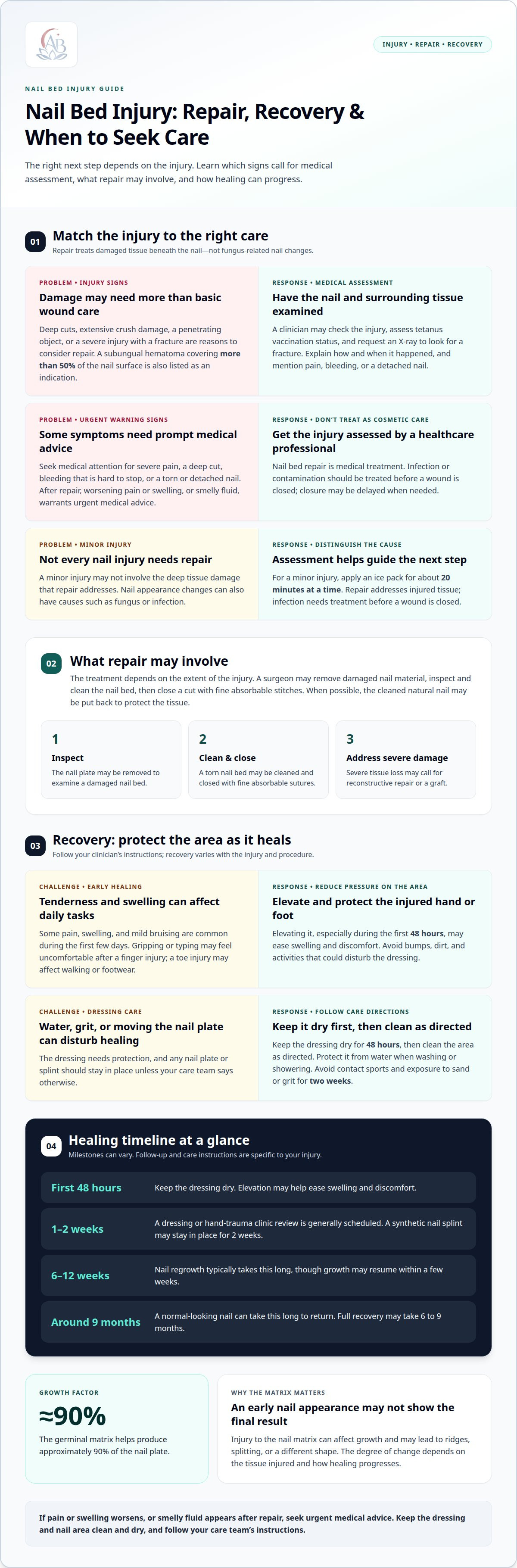
Repair may be considered for deep lacerations, extensive crush damage, a penetrating object, or a severe injury with a fracture. A subungual hematoma covering more than 50% of the nail surface is also listed as an indication. For a torn nail bed, a surgeon may clean the tissue and close the laceration with fine absorbable sutures. With an avulsion, the damaged nail may be removed; severe tissue loss may call for reconstructive repair or a graft. The treatment depends on injury extent, so damaged nail bed repair in Fort Lauderdale begins with medical assessment.
For a minor injury, apply an ice pack for about 20 minutes at a time. Severe pain, a deep cut, bleeding that does not easily stop, or a torn or detached nail calls for medical assessment.
Recovery and return to daily activities
You can usually go home the same day after nail bed repair. Some pain, swelling, and mild bruising are common during the first few days. Elevating your injured hand or foot, especially during the first 48 hours, may ease swelling and discomfort. Recovery depends on the injury and procedure, so follow your clinician’s care instructions.
Keep the dressing dry for 48 hours, then clean the area as directed. Protect the dressing from water when washing or showering. Keep the nail area clean and dry, and leave any nail plate or splint in place unless your care team tells you otherwise. A dressing or hand-trauma clinic review is generally scheduled within 1-2 weeks. A synthetic nail splint may stay in place for 2 weeks. Avoid contact sports and activities that could expose the injury to sand or grit for two weeks.
Everyday tasks may feel different depending on which nail was injured and how the dressing affects movement. A finger injury may make gripping or typing uncomfortable; a toe injury may affect walking or footwear. Protect the dressing and avoid bumps or dirt while the area heals. Follow-up care lets your team check the area and advise whether the dressing is still needed.
Nail growth may resume within a few weeks, though visible regrowth takes longer. A new nail may look unusual at 3 months, and a normal-looking nail can take around 9 months. Full recovery may take 6 to 9 months, depending on the injury. Seek urgent medical advice if pain or swelling worsens, or if you notice smelly fluid after the procedure.
Complications and nail deformity
Nail bed repair is intended to support healthy nail growth, but the injury and healing process can affect the final appearance. Damage to the nail matrix, which helps the nail grow, can change how the nail looks.
Risks and Possible Complications
Complications can include infection, scarring, and changes in nail growth. A deep cut or injury to the nail matrix can affect how the nail grows, sometimes changing its shape or surface. Infection or contamination needs treatment before the wound is closed. A doctor may prescribe antibiotics to help prevent infection after an injury.
Watch for increasing pain or swelling, or smelly fluid after repair. These changes warrant urgent medical advice because they may signal a healing problem. Follow postoperative care instructions closely. Keeping the dressing and nail area clean and dry supports the repair site as it heals.
Outcomes and Permanent Nail Deformity
Outcomes depend on the injury’s extent, the surgical technique, and how closely you follow postoperative care. Repair is intended to restore the nail bed, support growth, and reduce the risk of deformity, but it cannot erase all effects of severe tissue damage. The germinal matrix helps produce approximately 90% of the nail plate, so an injury there can have a lasting effect on the nail.
After matrix damage, a nail may grow back with ridges, splitting, or a different shape. The degree of change depends on which tissue was injured and how healing progresses. A normal-looking nail can take around 9 months to return, so its early appearance may not show the eventual result.
Seek urgent medical advice if pain or swelling worsens, or if smelly fluid appears after the procedure. These symptoms need prompt attention during healing.
Professional treatment and nail bed repair
Nail bed repair is medical treatment for tissue injuries that need more than basic wound care. It should be performed by a qualified hand surgeon or an experienced healthcare professional skilled in nail injuries. The type of care can depend on the patient’s age and the injury. Extensive nail bed damage with an underlying fracture needs hand-surgery assessment.
During repair, the surgeon may remove damaged nail material, inspect and clean the nail bed, then close a cut with small stitches that dissolve over time. If the nail bed is missing or severely damaged, the surgeon may need to address the affected area as part of the repair. When possible, the cleaned natural nail may be put back in place to protect the tissue. These steps support healing and help protect the nail bed as it recovers.
Infection or contamination is treated before repair, and wound closure may be delayed. A doctor may prescribe antibiotics to help prevent infection after an injury. If blood beneath the nail is the main concern and the nail remains intact, a doctor may make a small opening to drain it. This option is not used for a damaged nail.
Cosmetic nail care is different: salon services cannot assess fractures, repair cuts, or replace medical treatment for an injured nail bed. Seek medical care for severe pain, a deep cut, bleeding that is difficult to stop, or a torn or detached nail.
Alura Bliss: Nail Services
Alura Bliss offers Nail Services for routine nail care and appearance, not medical treatment for an injured nail bed. If you have a deep cut, a torn or detached nail, severe pain, or ongoing bleeding, seek medical care first. A salon appointment is appropriate after the injury has healed and you’re ready to return to cosmetic nail care.
Once healing is complete, you can consider nail services as part of your regular personal care. An injury-related change in nail shape or surface may affect the appearance of a manicure. Share your nail care preferences at your appointment so the service can be tailored to your needs.
For a calm next step after medical care and healing, contact Alura Bliss to ask about Nail Services.
Choose your next step with confidence
For damaged nail bed repair in Fort Lauderdale, let the injury guide your next step. Medical concerns belong with a medical professional; cosmetic nail care can wait until the injury has healed. As the nail grows, its appearance may change, so consider your comfort and nail condition before choosing a future service.
Alura Bliss offers Nail Services alongside facial options, including a Hydrating Facial, Anti-Aging Facial, and Acne Facial. The salon’s approach centers on thoughtful attention to each service. Choose the care that suits your preferences when you’re ready to return to your routine.
Give your nail time to recover, then return to self-care at a pace that feels right. A thoughtful next step can help you feel comfortable and confident as your routine resumes.
Frequently Asked Questions
What are the benefits of a repair?
Repair can help put the tissue beneath the nail back in place. When appropriate, a clinician may replace the natural nail as a temporary support while the area heals. This can help keep the skin around the nail from sticking to the healing tissue. Repair also lets the clinician examine the area, remove tissue that cannot heal, and check whether the part of the nail that produces new growth needs attention.
What are the risks of the procedure?
Possible risks include infection, scarring, and lasting changes to the nail’s shape or surface. Damage to the part that produces new nail growth may affect how the nail grows back, and repair cannot restore tissue already lost in a severe injury. The type and extent of the injury, along with following care instructions, can affect the risks.
What happens after the procedure?
Repair is generally an outpatient procedure, so you can go home the same day. A clinician may use a splint to support the tissue beneath the nail while it heals, then arrange a dressing check. Ask your care team which movements or tasks to adjust, especially if you use the injured finger or toe for gripping, typing, or walking.
What is a nail bed injury?
A nail bed injury damages the tissue beneath the hard nail, which supports the nail and helps it grow. For example, a door closing on a finger can press the nail bed against the bone at the fingertip. That pressure may cause a tear beneath a nail that looks mostly intact.
When does a nail bed need surgery?
Surgery may be considered when the tissue beneath the nail is cut, badly crushed, detached, or injured along with a fracture. A cut with a fracture in the fingertip bone is treated as an open fracture. The decision depends on the tissue injury and fracture findings, not nail discoloration alone. A clinician may examine the nail and use imaging to check the bone.
What symptoms of a damaged nail bed require immediate medical care?
Get prompt medical care for severe pain, a deep cut, bleeding that is difficult to stop, or a nail that is torn or pulled away from the tissue beneath it. An object that goes through the nail area also needs assessment. If symptoms worsen after treatment, such as increasing swelling or unusual-smelling fluid, contact your medical team urgently.


