

A few blemishes can appear after a facial, and post-facial breakouts may last from a few days to two weeks, depending on your skin and the treatment. This post-facial breakout prevention guide explains why your skin may react, how to tell a temporary flare from possible irritation, and how to care for your complexion without squeezing or picking.
You’ll also learn how makeup, sweat, heat, and friction can affect freshly treated skin, what to share before a facial, and when professional advice may help you choose a thoughtful next step for your skin.
Key Takeaways
- Learn how to distinguish a possible temporary flare from signs that your skin may be irritated.
- Choose gentle, non-comedogenic skin care and makeup to help keep pores from becoming clogged.
- Find out how heat, sweat, makeup, and friction can affect freshly treated skin.
- Care for blemishes without squeezing, and learn when an acne facial may be a suitable next step.
Is it normal for skin to get worse before it gets better?
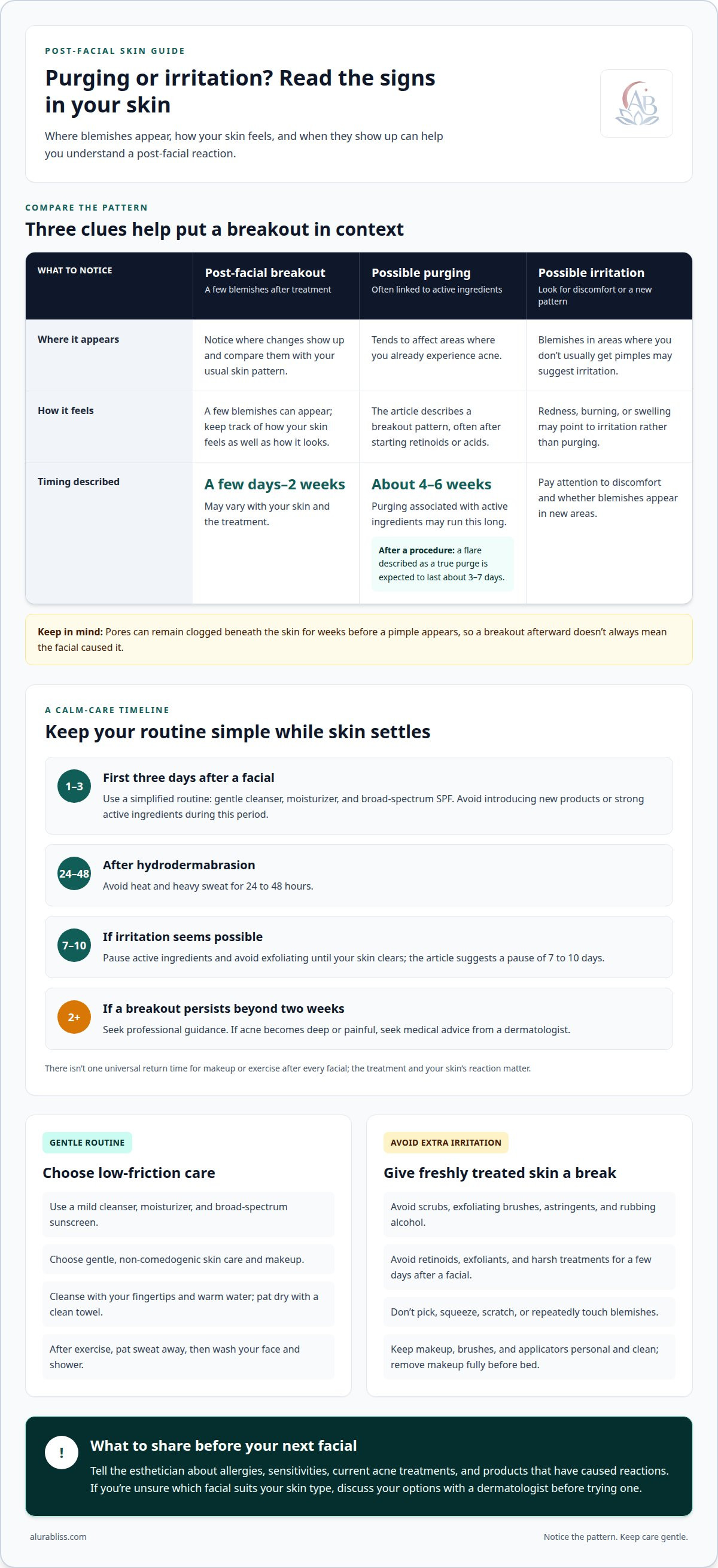
A few blemishes can appear after a facial, but redness, burning, or swelling may point to irritation rather than purging. Breakouts in areas where you don’t usually get pimples can also suggest irritation. A post-facial breakout may last from a few days to two weeks, depending on your skin and the treatment. Notice where changes appear and how they feel, not just how many blemishes you have.
Purging may happen after you start active ingredients such as retinoids or acids. This type of breakout tends to affect areas where you already experience acne, while irritation may bring discomfort or blemishes in new areas. Purging associated with active ingredients may run about 4 to 6 weeks. A post-procedure flare described as a true purge is expected to last about 3 to 7 days. These different timelines make the treatment and products you used useful context to share with an esthetician.
Choose makeup and skin care labeled non-comedogenic, meaning the products are not expected to cause acne. After a facial, keep your routine simple: use a mild cleanser, moisturizer, and broad-spectrum sunscreen. Avoid adding unfamiliar ingredients while your skin readjusts. For a possible irritation reaction, pause active ingredients and avoid exfoliating until your skin clears; a suggested pause is 7 to 10 days. Skip scrubs, exfoliating brushes, astringents, and rubbing alcohol, which can dry or inflame acne-prone skin.
Before your next facial, tell the esthetician about allergies, sensitivities, current acne treatments, and products that have caused reactions. This information can help guide choices for your skin’s needs. If you’re unsure which facial suits your skin type, discuss your options with a dermatologist before trying one. Introduce new skin-care products slowly, and avoid exfoliants, retinoids, or harsh treatments for a few days after a facial. If a breakout persists beyond two weeks, seek professional guidance.
Heat, sweat, makeup, and friction precautions
After a facial, keep retinoids and exfoliants paused for a few days; wait until your skin feels comfortable before resuming makeup or exercise. After hydrodermabrasion, avoid heat and heavy sweat for 24 to 48 hours.
Makeup Hygiene and Removal
Good makeup hygiene means keeping products and applicators personal and clean, and removing makeup fully before bed. Don’t share makeup, brushes, or applicators, as they can transfer oil, bacteria, and dead skin cells that may clog pores. At bedtime, remove makeup with a gentle cleanser. If you’re too tired to wash, use a non-comedogenic makeup-remover towelette, then return to your usual gentle cleansing routine.
During purging or visible redness, choose lightweight, non-comedogenic makeup and apply it gently. Avoid layering products over a pimple or rubbing your skin to conceal it. Wearing less makeup after a facial means fewer products on freshly treated skin. If makeup causes stinging or a new reaction, remove it gently and leave it off while the irritation settles.
Resuming Products and Activities
Resuming products and activities means returning gradually to your usual routine after your skin has had time to settle. Avoid retinoids, exfoliants, and harsh treatments for a few days after a facial. There isn’t one universal return time for exercise or makeup after every facial; the treatment and your skin’s reaction matter. For hydrodermabrasion, wait 24 to 48 hours before heat or heavy sweating.
After a workout, sweat can linger on your skin. Gently pat it away with a clean towel instead of rubbing, then wash your face and shower. Friction from towels or repeated wiping can worsen post-facial redness. Keep your routine gentle, and avoid touching freshly treated areas with your hands or shared gym towels.
Is It Normal to Break Out After a Facial?
A few blemishes can appear after a facial. Gentle care helps protect your skin as it settles. Keep cleansing simple, avoid over-washing, and watch for changes over the next few days.
Causes and Timing of Post-Facial Breakouts
Post-facial breakouts are blemishes that appear after treatment, sometimes when previously clogged pores become visible. Pores can remain clogged beneath the skin for weeks before a pimple appears, so a breakout afterward doesn’t always mean the facial caused it. Your treatment and skin condition can both affect how your skin responds. Breakouts may last from a few days to two weeks, depending on your skin and the treatment. If blemishes continue appearing, spread, or remain unchanged beyond seven days, contact a provider or dermatologist.
Gentle Cleansing and Skincare
Gentle cleansing removes surface sweat and residue without unnecessary friction. If you have breakouts, cleanse twice daily with a mild cleanser, using your fingertips and warm water. Pat dry with a clean towel. Avoid scrubbing and exfoliating while your skin feels sensitive; rubbing can add irritation rather than clear blemishes. During purging, stick to gentle, non-comedogenic products. After a workout, pat away sweat with a clean towel instead of rubbing, then wash your face and shower. Sweat left on the skin may trigger irritation.
Preventing Breakouts and Following Up
For the first three days after a facial, use a simplified routine: gentle cleanser, moisturizer, and broad-spectrum SPF. This provides a clear, low-friction approach during the first 24-72 hours, when mild pinkness or tightness may occur. Avoid introducing new products or strong active ingredients during this period. To help prevent breakouts, use gentle, non-comedogenic products and cleanse after exercise. Skip astringents, rubbing alcohol, and other products that dry your skin. If acne becomes deep or painful, or symptoms persist beyond two weeks, seek medical advice from a dermatologist.
Avoiding popping or squeezing breakouts
To reduce breakouts after extractions or chemical peels, avoid picking and keep your routine gentle. Harsh extractions may be especially unhelpful for sensitive or acne-prone skin.
Avoiding Touching, Picking, and Squeezing
Leave a pimple alone by resisting the urge to press, scratch, or repeatedly touch it. Picking can increase inflammation and raise the chance of scarring, so squeezing a blemish may leave a longer-lasting mark.
Try a practical reset: keep your hands occupied, perhaps by holding a clean towel after washing, instead of touching your face. If you catch yourself picking, stop and return to your usual gentle routine. Cleanse with your fingertips, pat dry, and apply moisturizer if your skin feels dry. Avoid rubbing the area to check whether the bump has changed.
Touching can also transfer bacteria and oil from your hands to recently treated skin. Keep your fingers away from blemishes during work, screen time, or other moments when touching your face becomes automatic. If a spot feels tender, don’t press it to assess the discomfort. Notice changes without manipulating your skin, and seek professional advice for deep or painful acne.
Avoiding Harsh Extractions
Harsh extractions use forceful pressure to clear clogged pores, which can aggravate already sensitive skin. Avoid them if you’re getting your first facial, particularly if your skin is sensitive or acne-prone.
Your skin type and recent reactions matter when deciding how much pressure your skin can tolerate. Share your skin history and any sensitivities before treatment so the approach can be adjusted to your needs. Don’t try to recreate extractions at home by pressing a pore with your fingernails or tools. After a facial, keep your routine gentle instead of trying to clear each new pimple manually.
After extractions or a chemical peel, keep your approach gentle and leave blemishes alone while your skin settles. Avoid adding scrubs or other harsh treatments that may increase irritation. A mild cleanser and moisturizer help keep your routine simple as you observe your skin. If acne becomes deep or painful, consult a dermatologist rather than applying more pressure or attempting extractions at home.
Alura Bliss
Alura Bliss offers facial treatments in Sunrise, Florida, for those seeking attentive care tailored to their skin concerns. Choose from a Hydrating facial, Anti-aging facial, Acne facial, or Signature Skin Renewal Treatment based on your goals and preferences. Before your appointment, share any sensitivities, allergies, current breakouts, and products that have caused irritation. This information helps guide a considered facial experience. If breakouts are deep, painful, or persistent, seek medical guidance from a dermatologist. For a calm, attentive facial in Sunrise, contact Alura Bliss.
Make Your Next Skin-Care Choice With Confidence
Think of this post facial breakout prevention guide as a starting point for a skin-care routine you can maintain, not a reason to change everything at once. Consistency makes it easier to notice which habits feel comfortable and which may need adjustment over time.
As your needs evolve, return to this post facial breakout prevention guide when planning your next steps. A thoughtful conversation can help you approach skin care with greater clarity and ease. Contact Alura Bliss to learn more about its beauty and wellness services and take a considered step toward feeling confident in your routine.
Frequently Asked Questions
What Is Skin Purging?
Skin purging is a temporary increase in blemishes after starting active ingredients such as retinoids or acids. It tends to appear in areas where you already experience acne, rather than in entirely new areas. Track which product you started and where spots appear. This information can help distinguish a familiar breakout pattern from a reaction to a new ingredient.
When should you be concerned?
Seek professional advice if blemishes become deep or painful, spread, or persist beyond two weeks. Redness, burning, or swelling may indicate irritation rather than purging. If symptoms worsen or you’re concerned about infection, contact a medical professional for an assessment instead of trying extractions or adding stronger products. A dermatologist can also help if acne continues despite skin-care adjustments.
Why do I get acne?
Acne can develop when clogged pores become visible as blemishes, sometimes weeks after they first became blocked. A facial may coincide with this process without being its only cause. New products or active ingredients can also irritate skin or contribute to a breakout. Note when blemishes appear and whether they follow your usual acne pattern. These details can help clarify what changed.
Which ingredients and products should you avoid after a facial?
For a few days after a facial, avoid retinoids, exfoliants, and harsh treatments. Skip astringents, rubbing alcohol, and products that leave your skin feeling dry or tight. Avoid introducing several new ingredients at once, which can make it harder to identify the cause of a reaction. Once your skin feels settled, reintroduce products gradually rather than layering multiple strong treatments together.
How should you choose a facial treatment if you have acne-prone or sensitive skin?
Choose a facial with your skin history in mind: share sensitivities, allergies, current acne products, and previous reactions before treatment. If you’re unsure which facial suits your skin type, discuss your options with a dermatologist first. If you have sensitive skin and are considering unfamiliar products, ask about patch testing before a full facial. These details can help guide a more considered treatment choice.
Are post-facial breakouts normal purging or signs of irritation or infection?
Blemishes in your usual acne-prone areas after starting retinoids or acids may fit purging. Blemishes in new areas, along with redness, burning, or swelling, point more toward irritation. These signs alone don’t establish an infection. If symptoms worsen or you suspect an infection, seek medical assessment instead of using more active products or trying to squeeze the blemish.


