

Waxing removes hair from the root, though how long results last can vary. If you’re considering waxing for sensitive skin, it may be an option when your skin is calm and your comfort is considered. Avoid waxing skin with sunburn, a rash, cuts, or broken areas, but sensitivity alone doesn’t automatically rule it out.
You’ll learn how bikini and Brazilian waxing differ in coverage, how to choose based on your comfort and preferences, and what to consider before an appointment. This guide also covers preparation and aftercare, including gentle habits that may help reduce ingrown hairs, so you can make an informed choice and know what to expect.
Key Takeaways
- Weigh waxing against shaving by considering how long you want results to last and how your skin responds.
- Choose bikini or Brazilian coverage according to your comfort and personal preference.
- Plan gentle aftercare to soothe freshly waxed skin and help reduce the chance of ingrown hairs.
- Learn when sensitive skin may need extra care and when it’s better to postpone waxing.
Why Choose Waxing Over Shaving?
Waxing removes hair from the root, while shaving cuts it at the skin’s surface. That difference shapes what you notice between hair-removal sessions. Body-waxing results typically last three to four weeks, though regrowth timing varies from person to person. Shaving may suit a quicker routine, but it doesn’t remove the root. Choose based on your preferred routine, comfort, and how long you want smoother-feeling skin between sessions.
Regrowth after waxing may feel finer and appear more slowly than regrowth after shaving. Hair grows in cycles, so a first appointment may not remove every hair at the same stage. With repeat sessions, you can observe how your own growth pattern changes. For Brazilian waxing, typical rebooking guidance is every 4 to 6 weeks. Use your own regrowth and skin response to decide when another appointment feels appropriate.
The time needed for chest waxing depends on the area being treated and the amount of hair. A small central area differs from the full chest, and hair density and the coverage you request also affect the service. When planning your visit, describe the area you want treated rather than assuming every chest-waxing appointment takes the same amount of time.
Appointment requirements and cancellation policies vary by provider. Review the booking terms when reserving your appointment so you understand how changes or cancellations are handled.
When considering waxing for sensitive skin, weigh the practical differences before choosing. Waxing may mean longer intervals between hair-removal sessions, while shaving suits a routine focused on surface-level hair removal. Consider the treatment area, your regrowth pattern, and your comfort with waxing. Before the service, communicate your preferences and the coverage you want.
Bikini line, full bikini, and Brazilian waxing options
A bikini-line wax focuses on hair that may show beyond underwear or swimsuit edges. It’s a limited option if you want a neater outline while keeping most hair untouched. For example, the requested area may follow the sides of a swimsuit bottom. Tell the specialist what you want left untouched, since garment cuts and personal preferences differ.
A full bikini wax removes more hair than a basic bikini-line service, creating a cleaner finish across a broader area. The exact boundary can vary, so the service name alone may not describe the final shape. Decide whether you prefer a narrow strip, a smaller shape, or another outline. Clear directions help align the result with your comfort and preferred coverage.
A Brazilian wax generally removes most hair from the front and back, with the option to leave a small strip or shape. This broader option may suit you if you prefer minimal hair, while a bikini-line wax keeps more natural coverage. Consider the treatment area and your comfort before choosing. If it’s your first time, describe your preferred shape rather than relying on the service label alone.
Preparation can make your choice easier to communicate. Before the appointment, decide which areas you want treated and which you want left untouched. For Brazilian waxing, arrive with about a quarter inch of hair, roughly the length of a grain of rice. Gently exfoliating the waxing area 24 to 48 hours before the appointment is also recommended. Avoid scrubbing immediately before the service, and share any coverage preferences before waxing begins.
Think of the three options as different levels of coverage, not a ranking. A bikini-line wax removes the least, a full bikini covers more, and a Brazilian usually removes the most. Your preferred swimsuit, desired shape, and comfort help determine the right fit. Naming a specific preference, such as leaving a strip or keeping hair outside the underwear line, gives a clearer starting point.
Waxing aftercare and ingrown-hair prevention
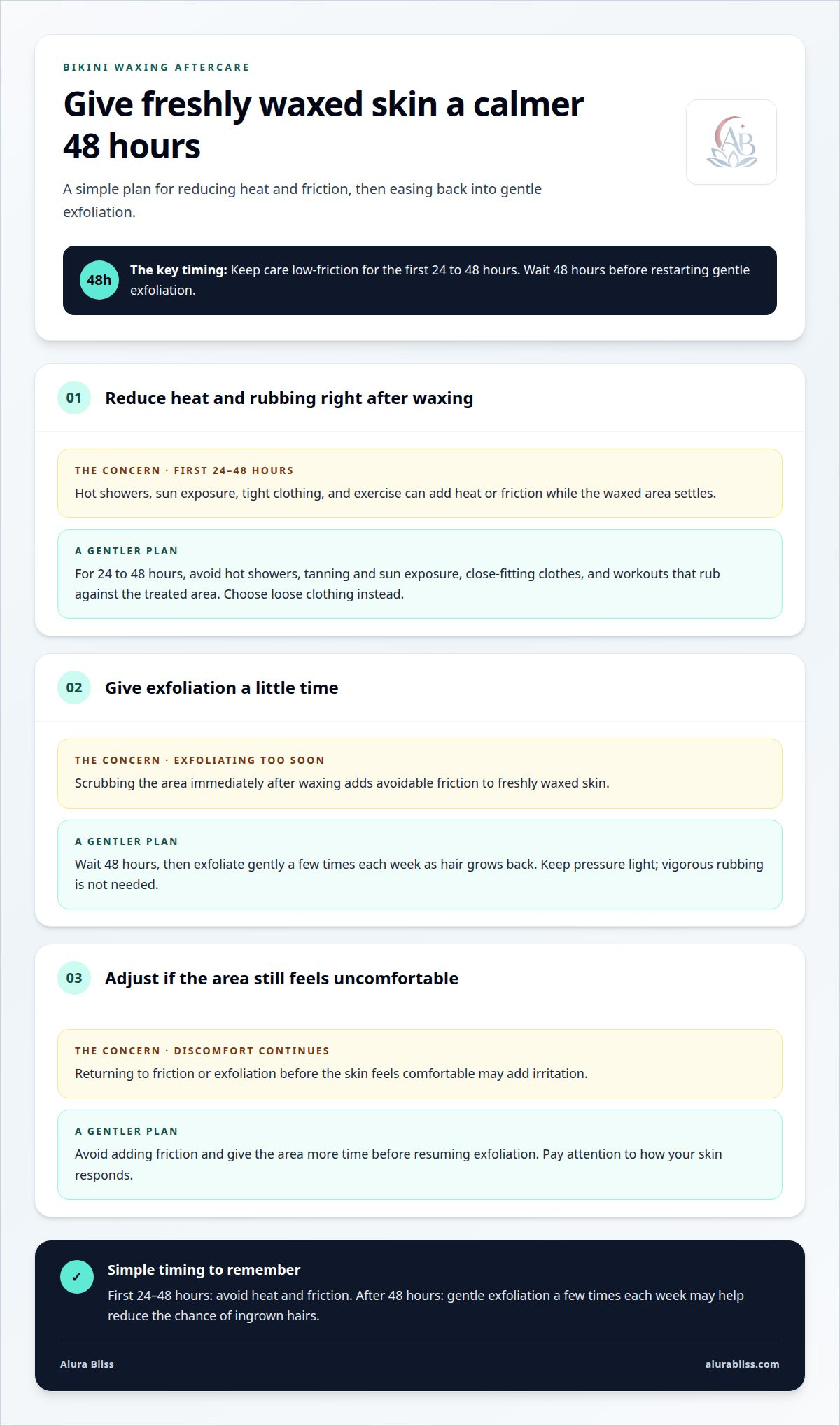
Aftercare gives freshly waxed skin time away from common sources of friction and heat. For a bikini wax, plan your first 24 to 48 hours around gentle, low-friction care.
Waxing Aftercare
For 24 to 48 hours after waxing, avoid hot showers, sun exposure, tight clothing, and exercise. These steps reduce avoidable heat and rubbing while the waxed area settles. After a bikini wax, avoid tanning and sun exposure during the same 24 to 48 hours. Choose loose clothing instead of a close-fitting waistband, and pause workouts that cause friction against the treated area.
Ingrown-Hair Prevention
Wait until 48 hours after waxing before beginning gentle exfoliation. Then exfoliate a few times a week to help prevent ingrown hairs as hair grows back. Keep the pressure light rather than scrubbing, especially across the bikini area. Regular, gentle exfoliation can help clear away surface buildup around regrowing hairs, while vigorous rubbing may add unnecessary friction to recently waxed skin.
Timing matters. Starting exfoliation too soon skips the recommended 48-hour pause; leaving it out entirely removes a useful prevention step. Build a simple routine around the treated area: wait 48 hours, then exfoliate gently a few times each week. If the skin remains uncomfortable, avoid adding friction and give it more time before resuming exfoliation.
Plan clothing and activities alongside your aftercare. For example, schedule a bikini wax when you can wear loose-fitting clothes and avoid exercise, hot showers, and direct sun for 24 to 48 hours. If your plans include outdoor time, tanning, or a workout, consider choosing a different appointment day. That practical timing helps you follow the care steps without disrupting your routine.
As regrowth appears, keep exfoliation gentle and consistent rather than increasing pressure or frequency. A few sessions each week after the initial 48-hour wait are the suggested approach. Pair that routine with reduced friction during the first 24 to 48 hours, and pay attention to how the waxed area responds. These manageable steps support smoother-feeling skin while helping reduce the chance of ingrown hairs.
Waxing for sensitive skin
Body waxing may suit many skin types, including sensitive skin, but the condition of the area matters. Before waxing, consider your skin’s current condition, preferred method, and preparation.
Hard Wax and Soft Wax
No wax type is the best choice for everyone with sensitive skin. Your comfort and past skin response matter more than the label. Tell the specialist about your sensitivity before the appointment, then discuss the area and your preferences. This conversation helps guide the service without assuming hard wax or soft wax will feel the same for everyone.
Waxing and Sugaring
Waxing and sugaring are different hair-removal methods, but sensitivity alone doesn’t establish which will feel gentler for you. Consider your personal comfort, past reactions, and the treatment area. Share any previous response to hair removal before deciding. A method that felt comfortable on one area may not feel the same on another.
Sensitive-Skin Salon Selection
When reading salon reviews, look for specific comments about cleanliness, communication, and care for sensitive skin. Details about how a salon handles client concerns are more useful than a general rating alone. Reviews can’t predict your individual skin response, so focus on descriptions of the appointment experience. Before the service, mention your sensitivity and discuss how it will be considered.
Preparing Sensitive Skin
Gently exfoliate the waxing area 24 to 48 hours before your appointment. Tell the specialist beforehand if your skin is particularly sensitive, so extra precautions can be taken. Avoid waxing an area with sunburn, a rash, cuts, or broken skin. If you have an active skin concern or are unsure whether waxing is suitable, consult a dermatologist before scheduling. These steps give you a clearer basis for feeling confident about your decision.
Alura Bliss
Alura Bliss is a natural next step if you’d also like professional skincare in your personal-care routine. Hair removal and facial care are separate choices, so you can decide what feels comfortable for your skin.
Choose a facial based on your skincare focus: a Hydrating facial, Anti-aging facial, Acne facial, or Signature rejuvenating facial. Each is a distinct option in Alura Bliss’s facial services, so choose according to your skincare priorities. To discuss a facial or book an appointment, contact Alura Bliss.
Choose a Next Step That Feels Right
Let your comfort and preferences guide your next appointment. Hair removal is a personal-care choice, not a test of how much discomfort you should tolerate. Before booking, consider what would help you feel at ease, from the coverage you want to the questions you’d like answered. Clear communication can help you decide whether waxing fits your needs.
Alura Bliss offers hair removal along with Hydrating facial, Anti-aging facial, and Acne facial services. The team’s beauty-care expertise can help you consider your preferences and the services that suit your personal-care routine. Your skin’s condition and your comfort remain central to deciding what feels appropriate.
For sensitive skin waxing in Tamarac, take time to share your concerns and what you hope to achieve. If you’re ready to discuss a waxing appointment, contact Alura Bliss about waxing. Your next step can be thoughtful, personal, and entirely your own.
Frequently Asked Questions
Is body waxing suitable for sensitive skin?
Whether body waxing is appropriate depends on your skin and the area you’d like treated. Tell the specialist about your sensitivity before the service and describe any previous reaction. That conversation gives them a chance to consider your concerns. Sensitivity alone doesn’t automatically rule out waxing, but sunburn, rashes, cuts, or broken skin are reasons to avoid waxing that area.
What is Waxing Hair Removal?
Waxing removes hair from the root, while shaving cuts it at the skin’s surface. Bikini-line, full bikini, and Brazilian services describe different coverage choices, not different hair-removal methods. The right option depends on how much hair you want removed and the shape you prefer, so describe your preferred result clearly before the service.
What sensitive-skin waxing services and techniques do Tamarac salons offer?
Alura Bliss offers hair removal, and you can describe the bikini or Brazilian coverage you want in specific terms. State which areas you’d like treated and what you prefer left untouched, since service labels can vary. Before your appointment, mention sensitive skin and any past reactions. This gives the specialist useful context for discussing your preferences and comfort.
What aftercare should you follow after waxing sensitive skin?
Keep aftercare simple, and pay attention to how the treated area responds before your next appointment. Note which clothing, activities, or products feel comfortable, and share that information with your specialist. For example, if a waistband rubs the area, choose a looser option next time. Personal notes can help guide a thoughtful conversation about future visits.
What are the risks and side effects of waxing sensitive skin?
Avoid waxing skin with sunburn, a rash, cuts, or broken areas, since treatment may irritate skin that is already compromised. If your skin is particularly sensitive, tell the specialist before the service so your comfort can be considered. If you have an active skin concern or are unsure about waxing, postpone treatment and seek individualized advice from a dermatologist.


