

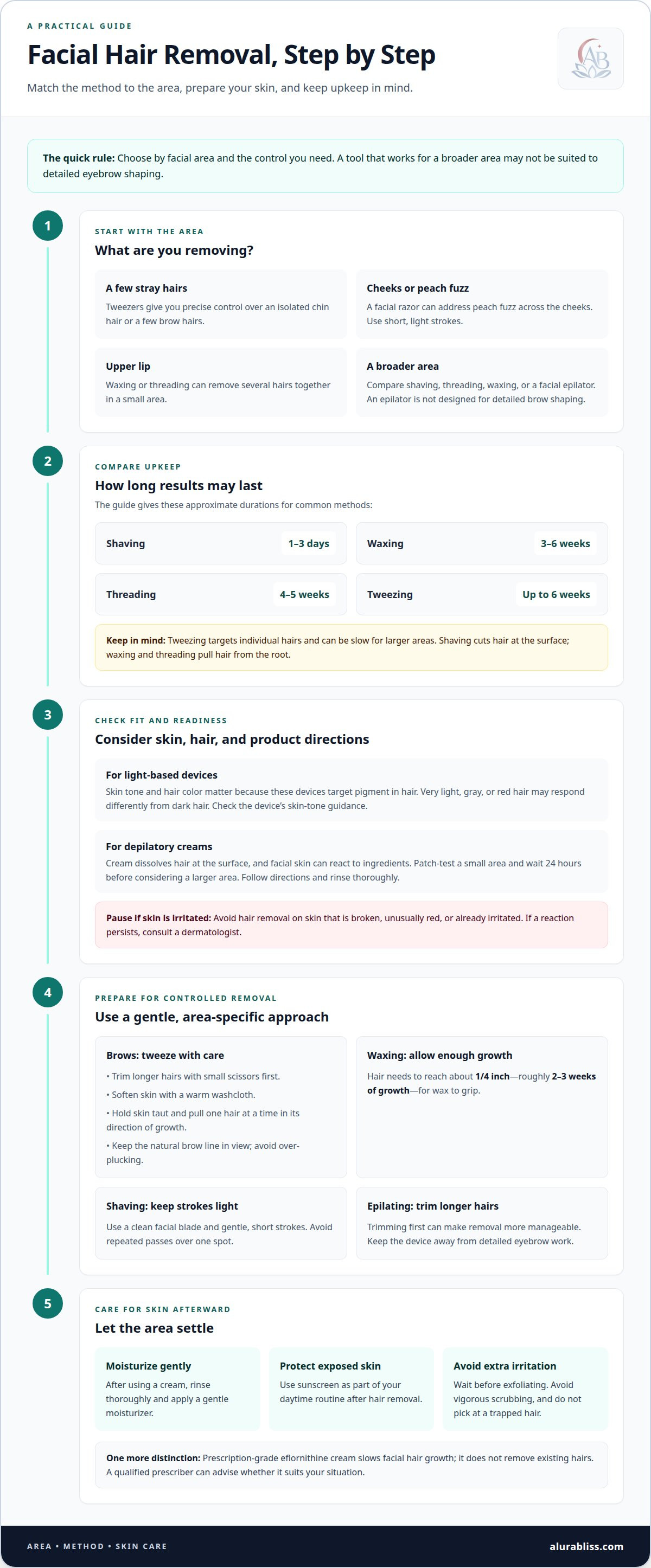
Choose facial hair removal by area and preference: shaving usually lasts one to three days, waxing three to six weeks, threading four to five weeks, and tweezing up to six weeks.
For a stray chin hair, tweezing offers precision. Broader areas may suit another method, while skin tone and hair color matter when considering light-based removal.
This guide compares shaving, waxing, threading, tweezing, and epilation, then helps you weigh comfort, upkeep, and control for facial hair, including careful options for brows and forehead hair.
Key Takeaways
- Match the removal method to the area: a tool suited to a broader facial area may not offer the control needed for eyebrow shaping.
- Consider your skin tone and hair color when weighing light-based options against methods that remove hair directly.
- For a more controlled brow or forehead cleanup, learn how to soften the skin before tweezing and when to avoid an epilator.
- Compare each method’s precision, comfort, and upkeep to find an approach that feels manageable for your routine.
What's the best for facial hair removal tool for women?
Choose a tool based on the facial area, hair type, and control you need. Tweezers can remove an isolated chin hair or shape a few brow hairs; a facial razor can address peach fuzz across the cheeks. Shaving typically lasts one to three days, while waxing results may last three to six weeks. The gentlest option is the one suited to the area and your skin’s needs.
Facial hair removal creams dissolve hair at the surface, but facial skin can react to their ingredients. Patch-test a new cream before applying it to a larger area, then wait 24 hours to watch for a reaction. Follow the product directions, rinse thoroughly, and apply a gentle moisturizer. Use sunscreen as part of your daytime routine after hair removal, especially on exposed facial skin.
| Option | Best suited for | What to consider |
|---|---|---|
| Tweezers | Single chin hairs and precise brow cleanup | Slow for larger areas |
| Facial razor | Cheeks and peach fuzz | Results typically last one to three days |
| Wax | Areas such as the upper lip | Results may last three to six weeks |
| Facial epilator | Removing hair from broader areas | Not designed for detailed eyebrow shaping |
Some facial epilators come with cleansing attachments. These serve different purposes: the epilator removes hair, while the attachment cleanses skin. Trim longer hairs before epilating to make removal more manageable, and keep the device away from detailed eyebrow work.
Prescription-grade eflornithine cream slows facial hair growth; it doesn’t remove existing hairs. A qualified prescriber can advise whether it suits your situation. It works differently from creams that dissolve hair, tweezers that pull it out, or an epilator that removes it from the follicle.
Professional facial hair removal in the United States varies by method and treatment area. A brow cleanup and a larger facial service require different approaches. Choose based on the area, your preferred method, and how much upkeep fits your routine.
Comparing shaving, waxing, threading, tweezing, and epilation
Each method removes hair differently, affecting precision, sensation, and upkeep. Shaving cuts hair at the skin’s surface, while waxing and threading pull it from the root. Tweezing targets individual strands; an epilator uses rotating tweezers to remove several hairs at once. Depilatory cream dissolves hair at the surface, so it works differently from these tools.
For broad areas such as the cheeks, shaving can be controlled with short, light strokes. On a small upper-lip area, waxing or threading removes several hairs together. Threading uses twisted thread to lift hairs, making it useful for defined areas. Tweezing offers precise control over individual hairs, especially around the brows.
- Shaving: Use a clean facial blade and gentle strokes. Shaving results typically last one to three days.
- Waxing: Hair needs to reach about 1/4 inch, roughly 2-3 weeks of growth, for wax to grip.
- Threading: A skilled thread motion removes rows of hair without applying wax to the skin.
- Tweezing: Pull one hair at a time in its direction of growth to target brow strays.
- Epilation: Trim longer hairs first; a facial epilator isn’t suited to detailed eyebrow shaping.
For brow grooming, trim long hairs with small scissors before tweezing strays. A warm washcloth can soften the skin first. Hold the skin taut, then remove hairs individually while keeping the natural brow line in view. Avoid over-plucking: removing too many hairs can change the shape you’re refining.
Shaving can sometimes cause ingrown hairs, which usually improve on their own within days. Avoid picking at a trapped hair. Gentle cleansing removes surface debris, including dead skin cells, but vigorous scrubbing can irritate freshly treated skin. Give the area time to settle before using exfoliating products.
Choose a method based on the area, the precision you need, and how you prefer to maintain results. Tweezing offers control over a few brow hairs; for a larger area, compare shaving, threading, or waxing.
Choosing methods for skin tone and hair color
Skin tone and hair color matter most when considering light-based removal. These devices target pigment in hair, so contrast between hair and surrounding skin can affect how the method works. Very light, gray, or red hair may respond differently from dark hair. Read the device’s skin-tone guidance before choosing one, and don’t assume every device suits every complexion. Gentle hair removal for the face starts with a method suited to both your hair and skin.
Shaving, threading, tweezing, and waxing remove hair mechanically or at the surface rather than targeting pigment. They are options to compare across a wider range of hair colors. For example, tweezers can remove a single light chin hair, while a facial razor can address peach fuzz. The right method still depends on your skin’s sensitivity and the area you’re treating.
For sensitive skin, introduce one method at a time. Before using a new facial hair removal product or device, test a small area and wait 24 hours for signs of irritation or redness. Follow the product directions, and don’t apply a cream or device across the face if the test area reacts. A patch test helps you notice a reaction, though it can’t guarantee that a larger area will respond the same way.
At home, gentle shaving with a clean facial razor or careful tweezing of a few hairs can offer control without depilatory cream. Use light pressure, avoid repeated passes over one spot, and stop if your skin becomes uncomfortable. If your skin is sensitive, small, deliberate steps are easier to assess than treating a broad area at once. This can make a gentle facial hair removal routine easier to manage.
Avoid hair removal on skin that is already irritated, broken, or unusually red. If a reaction persists, or you’re unsure whether a new product is suitable, pause removal and consult a dermatologist. This is especially sensible if you have a recurring skin concern or have reacted to facial creams before. A calm approach means choosing a method your skin tolerates, not trying to remove every hair in one session.
Eyebrow and forehead hair removal
Brows and the forehead sit close together, but they need different levels of control. Tweezing lets you remove individual hairs around the brow line without taking a broad strip of hair at once. For forehead cleanup, waxing can clear a larger area; results may keep eyebrow and forehead areas hair-free for up to 4 weeks.
Start brow grooming with a warm washcloth to soften the skin. Use clean tweezers, gently hold the skin taut, and remove only hairs outside your intended brow shape. Work one hair at a time, then pause to assess the outline. This measured approach helps prevent over-tweezing and an uneven arch.
- For a few stray brow hairs: Choose tweezers for direct, precise removal.
- For a broader forehead area: Waxing removes several hairs together, but requires more skin contact.
- For brow definition: Avoid a facial epilator, which isn’t suited to detailed eyebrow shaping.
Waxing may be convenient when you want a smooth forehead without removing each hair individually. Facial waxing can keep an area hair-free for several weeks, though brow shaping still requires careful boundaries. Keep wax away from the eyelids, and don’t apply depilatory cream near the eyes unless its directions specifically allow it. Ingredients vary, so follow the product instructions and patch-test a new cream.
Plan hair removal around makeup or an event. Removing brow or forehead hair just before applying makeup can leave freshly treated skin feeling sensitive. Give the area time to settle, and avoid layering products if you notice redness or discomfort. For a special occasion, such as wedding makeup, choose a familiar method rather than trying a new depilatory product at the last moment.
The clearest takeaway: tweeze for small, precise brow adjustments; consider waxing for a larger forehead area. Explore facial hair removal options to plan a tailored approach.
Alura Bliss: Waxing
Alura Bliss offers waxing in person for those who prefer salon care after weighing facial grooming methods. Before your appointment, consider the area you’d like addressed and what matters most, such as precision or a routine that feels easier to maintain. Sharing your preferences gives the conversation a useful starting point, even if you haven’t decided every detail.
If skincare is also on your mind, Alura Bliss offers a hydrating facial, anti-aging facial, and acne facial as separate services. Choose based on your skincare goals, or focus on waxing alone. Keeping those needs distinct helps you decide what you’d like your appointment to address.
Have a question or ready to discuss waxing? Contact Alura Bliss to start the conversation at a pace that feels comfortable for you.
Make Your Next Step Feel Personal
Your routine can change with your skin, schedule, or plans for a special occasion. Let comfort guide your choices: gentle hair removal for your face should feel manageable, not like a race to remove every hair. If your needs shift, adjust your approach rather than sticking with one method.
Alura Bliss also offers a hydrating facial, anti-aging facial, and acne facial for separate skincare goals. The team can help you consider which service aligns with what you’re looking for, whether you’re planning hair removal or adding a facial to your self-care routine.
For a calm next step, contact Alura Bliss for personalized advice. A thoughtful conversation can help you feel more at ease choosing care that suits you. Your next appointment can begin with a clear plan and a little more confidence, with guidance from the team’s beauty and skincare experience.
Frequently Asked Questions
Should you pluck chin hair?
Yes, tweezing an isolated chin hair can be a practical way to remove one or a few strands. Use it selectively rather than repeatedly working over a broad area, which can leave skin tender. If coarse hairs appear quickly or facial hair growth changes noticeably, a dermatologist can assess possible causes. For salon-based hair removal in Sunrise, Alura Bliss offers Hair Removal.
Can peach fuzz grow back stubbly after dermaplaning?
No. Dermaplaning removes hair at skin level; it doesn’t alter the follicle or change the hair’s natural thickness. As the cut end grows out, it may feel blunt against your fingers, which can seem stubbly. That sensation is temporary and differs from a change in hair growth. Lighting and hair length can also affect how visible peach fuzz appears.
How do hair removal creams work?
Depilatory creams use chemical ingredients to weaken the hair shaft at the skin’s surface, allowing it to be wiped away rather than pulled from the follicle. Facial formulas are made for facial use, while body formulas may not suit that area. Read the label for placement and timing, remove the product as directed, and rinse away residue thoroughly.
How do facial hair removal methods compare: threading, dermaplaning, waxing, shaving, and depilatory creams?
Threading and waxing remove hair from the root; shaving cuts it at the surface, and depilatory creams dissolve it there. Dermaplaning removes surface hair and dead skin cells, while tweezing targets individual strands. Threading results typically last 4-5 weeks, waxing 3-6 weeks, shaving one to three days, and dermaplaning 2-4 weeks. Choose by area, precision, and skin tolerance.
How can I remove facial hair safely on sensitive or acne-prone skin?
For sensitive or acne-prone skin, avoid removing hair over active breakouts, open blemishes, or irritated patches. Cleanse with lukewarm water, skip vigorous exfoliation, and don’t combine several methods in one session. After removal, wait at least 48 hours before restarting retinoids or strong exfoliants. If irritation persists, pause hair removal and seek guidance from a dermatologist.
What ingredients should I avoid in facial hair removal creams for sensitive skin?
No single ingredient is unsuitable for every sensitive face; formulas differ, and personal reactions vary. Read the full ingredient list and avoid anything that has caused you irritation before. Choose a cream labeled for facial use and follow its directions. Patch-test a small area, then wait 24 hours before broader application. Stop using the product if burning or redness develops.


