

A congested-pores extraction facial in Tamarac can help clear blackheads and trapped debris, leaving clogged areas looking smoother, though it can’t eliminate pores or guarantee congestion won’t return. For oily or congested skin, a suggested rhythm is every 4 to 6 weeks; people with frequent blackheads or whiteheads may be a good fit, while tender or sunburned skin should wait until it has settled. Learn what a deep-pore cleansing facial may involve, what to expect from extractions, how to care for your skin afterward, and how to think about treatment frequency so you can make a comfortable, informed choice.
Key Takeaways
- Learn how professional extractions can clear blackheads, whiteheads, and trapped debris, and what changes you may notice afterward.
- See why 4 to 6 weeks is a suggested interval for oily or congested skin, and what can shape your personal treatment rhythm.
- Understand the steps a deep-pore facial may include, from cleansing and exfoliation to extractions and a finishing mask.
- Recognize when congested skin may be a good fit for a facial and when tenderness or more serious acne calls for a different approach.
Blackheads and Clogged Pores: What Can a Professional Facial Actually Do?
A congested pores extraction facial in Tamarac focuses on accessible plugs, including blackheads and whiteheads, rather than every dark mark. The approach depends on what is clogging the pore and how your skin responds.
Blackhead and Whitehead Extraction
During an extraction, a skin professional works to release visible blackheads, whiteheads, and trapped debris from clogged pores. Blackheads have an open surface; whiteheads remain covered by a thin layer of skin. The provider focuses on congested areas and adjusts pressure to avoid forceful squeezing. Extractions can feel uncomfortable in a blocked area, but should not feel extreme. Redness or irritation can follow.
Benefits for Superficial Congestion
For superficial blackheads and clogged pores, removing visible plugs can make skin look clearer and feel smoother. Clearing debris may also improve texture and leave the surface looking more even. A professional facial can temporarily improve the appearance of congestion, but it cannot eliminate pores or prevent every future breakout. Regular care and a simple skincare routine can support results; heavy or leftover makeup may contribute to buildup if not removed gently.
Not every dark spot is a blackhead. A blackhead is a pore with a darkened plug; a flat brown mark, mole, or freckle may have another cause. Extraction addresses pore contents, not pigment or other marks. If a spot is changing, painful, or unusual, don’t treat it as a cosmetic clog.
Manual extraction releases an accessible plug. A chemical peel uses exfoliation to loosen surface buildup, while a Hydrafacial-style treatment may combine cleansing and exfoliation. These approaches differ; the right fit depends on the type of congestion and your skin’s tolerance.
For a facial in Florida, look for a licensed full specialist esthetician. This licensed beauty professional is qualified as a full specialist esthetician, not a medical provider.
Before your appointment, avoid squeezing clogged pores and share relevant skin sensitivities. After extractions, pause strong retinoids and harsh exfoliants for 48 to 72 hours. Keep cleansing gentle, use your fingertips instead of scrubbing, and let irritated skin settle before resuming stronger products.
Recommended treatment frequency
For oily or congested skin, a deep-pore cleansing facial every 4 to 6 weeks is a suggested rhythm. Recurring congestion may also call for a short series of 3 to 6 treatments, with the schedule shaped by how quickly clogged pores return.
These intervals are guides, not a reason to book automatically. Track whether blackheads return between appointments, whether new breakouts appear, and how your skin settles after each treatment. If your complexion stays clearer for longer, your timing may differ from a routine for persistent congestion. The aim is to remove accessible buildup safely while supporting smoother, clearer-looking skin.
For acne products, bring the names of your cleansers, exfoliants, and spot treatments to your appointment. A facial plan should account for your existing routine, especially products that can leave skin feeling sensitive. After extractions, give your skin 48 to 72 hours before restarting strong retinoids or harsh exfoliants. Gentle cleansing helps you return to normal care without adding unnecessary friction.
In Tamarac, facial options for clogged pores include deep-pore cleansing and acne-focused treatments. The right choice depends on whether your main concern is visible blackheads, recurring breakouts, or general congestion.
Choose an appointment that leaves room for your skin to settle afterward. Avoid scheduling just before an event if temporary redness would concern you. Consider which treatment approach and timing suit your skin before booking.
When reading local reviews, look for feedback that specifically describes pore extractions, communication about comfort, and how skin looked afterward. Reviews offer context about other clients’ experiences, while your own skin’s response can guide future treatment spacing. In Tamarac, comments about the appointment process and aftercare can also help you understand what to expect from a local facial visit.
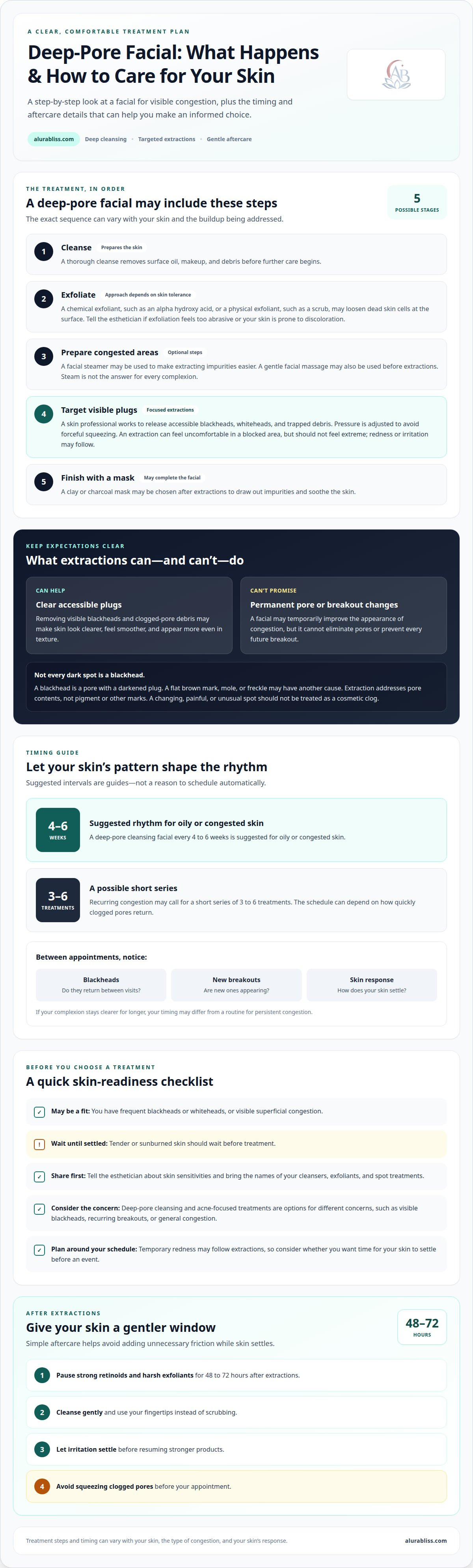
What does a Deep-Pore Cleansing Facial do?
A deep-pore facial combines cleansing, exfoliation, and targeted care for visible congestion. The exact steps can vary according to your skin and the buildup being addressed.
Deep Cleansing for Congested Pores
A thorough cleanse removes surface oil, makeup, and debris before further care begins. Exfoliation may follow, using a chemical exfoliant such as an alpha hydroxy acid or a physical exfoliant such as a scrub. Both approaches loosen dead skin cells at the surface, which can contribute to clogged pores. The choice depends on the treatment approach and your skin’s needs.
Extractions may then address accessible blackheads, whiteheads, and trapped debris. Clearing pores before a face mask can help the skin take in its ingredients. A clay or charcoal mask may be selected to draw out impurities and soothe the skin. These steps describe the treatment’s purpose, not a promise to prevent future acne.
Gentle Cleansing and Exfoliation
Gentle cleansing prepares skin without adding harsh scrubbing to an exfoliation step. A professional may choose a chemical exfoliant or physical scrub to lift dead skin cells and help loosen surface clogs. These methods differ, so a targeted approach considers the congested area and how your skin tolerates exfoliation.
If exfoliation feels too abrasive or your skin is prone to discoloration, tell the esthetician before treatment. The American Academy of Dermatology advises caution with exfoliation for skin prone to discoloration. That detail can help guide a discussion about which steps make sense for you.
Steam and Targeted Cleansing
A facial steamer is sometimes used during a deep-pore facial to make extracting impurities easier. Steam is one possible step, not the answer for every complexion. A gentle facial massage may also be used before extractions to help release pores. The sequence focuses on areas with visible congestion.
A mask may complete the facial after extractions. Clay or charcoal may be chosen to draw out impurities and soothe skin, while the earlier cleanse and exfoliation address surface buildup. Together, these steps aim to improve the appearance and feel of congested skin without removing or eliminating pores.
Professional extraction facial suitability
A congested-pores extraction facial in Tamarac may suit you if oily or acne-prone skin has recurring blackheads, whiteheads, or surface congestion. It focuses on accessible clogs, making it a cosmetic option for visible buildup rather than every type of breakout. Occasional blackheads differ from widespread, painful inflammation. A gentle approach matters if your skin becomes sensitive after exfoliation or cleansing.
Acne severity helps determine whether extractions are appropriate. Recurrent inflamed acne, nodules, cysts, scars, infection, painful swelling, or suspicious spots call for medical attention. A facial may help reduce blackheads and active clogs, but it does not replace medical acne care for severe cases. If your skin is sunburned or tender, wait until it has fully calmed before considering a deep-pore treatment.
Florida’s humid weather alone doesn’t determine whether a facial suits you. Consider your skin’s condition on appointment day: active tenderness, sunburn, or irritation matters more than the season. Heat and humidity may make your skin feel oilier, but that feeling alone doesn’t mean your pores need extraction. Share recent reactions and products that cause sensitivity so the treatment can account for your skin’s current condition.
Plan around visible redness, too. A deep-pore cleansing facial may leave temporary redness that settles quickly, but sensitive or inflamed skin may need a gentler approach. If a painful breakout or unusual spot is your main concern, prioritize medical advice instead of trying to extract it. For recurring superficial congestion, note how your skin responds afterward and whether redness or tenderness follows. When considering a congested-pores extraction facial in Tamarac, that response can help guide future cosmetic appointments, while ongoing or worsening acne deserves medical care.
Alura Bliss
Alura Bliss offers facial care to help you choose an approach suited to your skin concerns and routine. If breakouts or blemishes are part of the picture, an Acne Facial is designed to cleanse skin and address acne breakouts. For skin that needs moisture, a Hydrating Facial replenishes moisture, while the Signature Rejuvenating Facial combines techniques for skin renewal. The right focus depends on whether congestion, dryness, or visible signs of aging matter most to you.
A facial is a cosmetic option for surface congestion, not a substitute for medical care when acne is severe, painful, or inflamed. Share your skin concerns and current sensitivities when arranging an appointment so the conversation can focus on a suitable facial approach. Contact Alura Bliss to discuss your skincare needs.
Choose a Skin-Care Next Step
If you’re considering a congested-pores extraction facial in Tamarac, start by identifying the skin concern you most want to address. Think about what you’d like your routine to support, then use that priority to guide a conversation about facial care.
Share your preferences and any sensitivities that affect how you feel about treatments. A focused discussion can help you consider an approach that feels comfortable and aligns with your skincare goals.
Alura Bliss’s team brings expertise in facial care. Contact Alura Bliss to discuss your facial and take a thoughtful next step toward care that feels right for you.
Frequently Asked Questions
What Are Extractions?
Extractions are a focused part of facial care that addresses selected pore concerns. Before treatment, describe which areas bother you most and mention any spots you’d prefer to leave alone. This helps keep the appointment aligned with your priorities. If pressure feels uncomfortable during the visit, say so, so the approach can be adjusted.
How many sessions will I need to see results?
There isn’t one session count that fits everyone. After a visit, notice whether the areas you cared about remain a concern and whether new congestion appears. Bring those observations into your next skincare discussion rather than committing to a fixed series in advance. Changes in your skin can help clarify whether another appointment makes sense.
What Results Can You Realistically Expect?
Think of the outcome as a cosmetic change in the areas addressed, not a change to your underlying skin. Your overall appearance may still be influenced by concerns outside the treatment’s focus. For a useful comparison, note the specific areas you hoped to address and assess them after your skin has had time to settle.
What causes a pore to look clogged?
A pore may look blocked when material gathers at its opening, though a dark or raised spot can have another explanation. Appearance alone doesn’t establish what a mark is. Note whether it is flat, raised, changing, or uncomfortable, and describe those details during a skincare discussion. That context is more useful than assuming every visible spot is a clogged pore.
What happens in an extraction-focused appointment?
Make the appointment more focused by describing your main concern, the areas you want addressed, and any past discomfort with facial treatments. The esthetician can discuss the intended focus before beginning, giving you a chance to share preferences. Keep communication open during the visit, especially if a sensation feels uncomfortable or different from what you expected.
How should I prepare for a facial with extractions?
Before your appointment, think about your main skin concerns and which areas you’d like to discuss. Share any past discomfort with facial treatments and mention spots you’d prefer to leave alone. This gives the esthetician a clearer sense of your priorities and helps guide a conversation about the appointment’s focus.


